






Packaging Insights
Stand Up Pouches for Products Built to Scale

A pouch that looks right on a screen can still create problems on a production line, a retail shelf, or a customer’s kitchen counter. Stand up pouches must do more than hold product: they need to protect contents, present the brand clearly, ship efficiently, and fit the way customers use the product. For growing brands, choosing the right pouch is a practical purchasing decision with a direct effect on waste, labor, shelf presence, and repeat orders.
Why Stand Up Pouches Work Across Product Categories
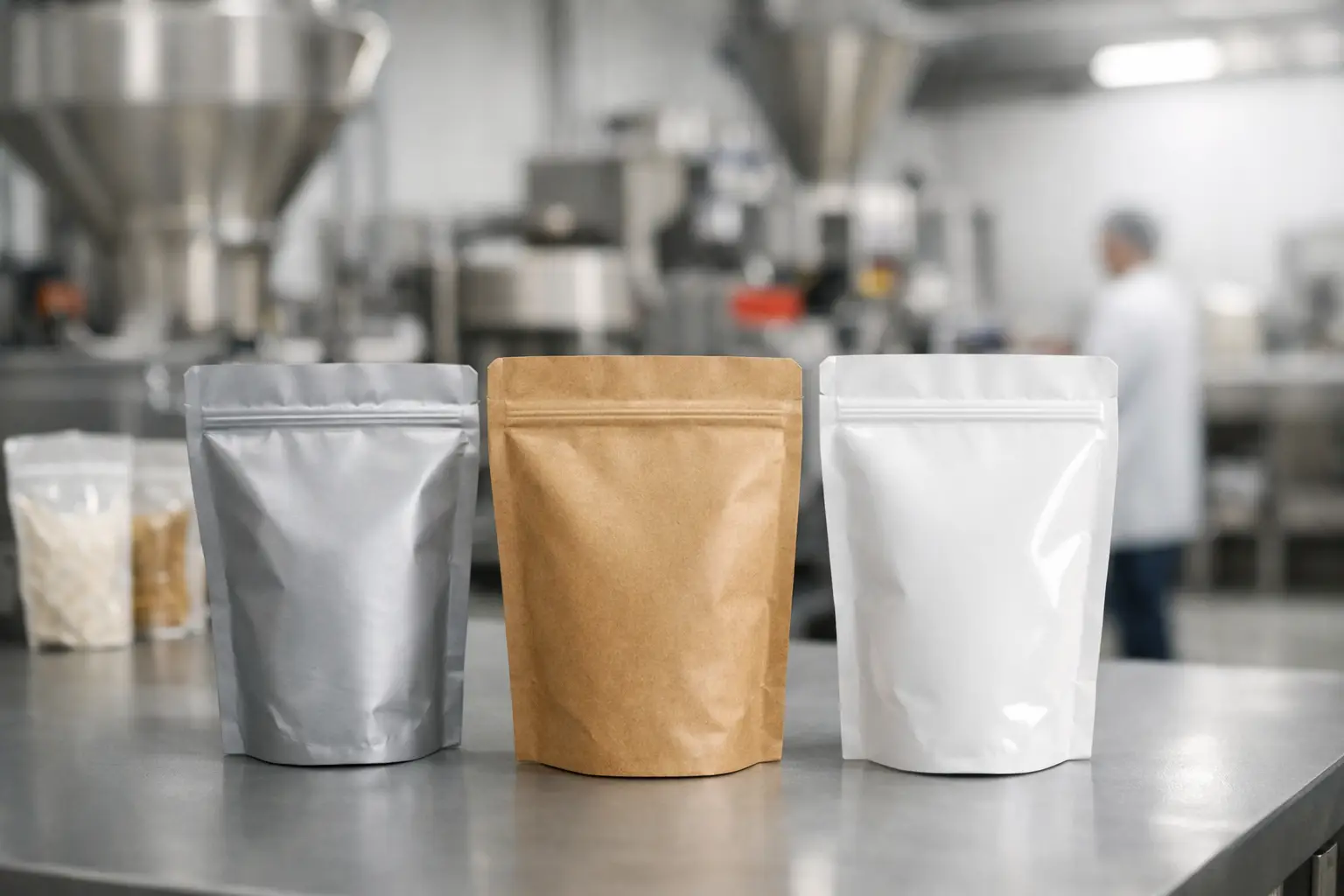
The defining feature of a stand up pouch is its bottom gusset. When the pouch is filled, the gusset opens to create a stable base, allowing the package to stand upright on a shelf or in a pantry. That structure gives brands more usable billboard space than many traditional bag formats while maintaining the material efficiency and shipping advantages of flexible packaging.
This format is a strong fit for coffee, tea, snacks, candy, dried foods, pet treats, supplements, powders, medical supplies, and many specialty retail products. It works especially well when a brand needs a package that feels retail-ready without the weight, breakage risk, or freight costs associated with rigid containers.
The format is not automatically the best choice for every item. Very heavy products may require a stronger pouch construction or a different package style. Fine powders, liquids, and products with sharp edges also require added attention to seal integrity, barrier structure, and filling conditions. The right choice starts with the product, not the pouch color or printed design.
Selecting Stand Up Pouches by Product Requirements
A good pouch specification balances five factors: product volume, material barrier, closure needs, shelf presentation, and production method. Missing any one of them can lead to underfilled packages, difficult sealing, stale product, or a costly packaging change after launch.
Start with fill weight and physical dimensions
Pouch dimensions do not tell the full capacity story. Width, height, bottom gusset, product density, and headspace all affect how much a pouch holds. Two products with the same weight can require very different pouch sizes. A dense granular product occupies less space than a light, irregular snack or a fluffy powder.
Before committing to a case quantity or custom run, fill actual product into samples. Check not only whether the product fits, but whether the pouch stands properly, leaves room for a reliable top seal, and presents well once it is closed. This simple step helps prevent a common issue: selecting a pouch based on a stated capacity rather than a real fill test.
Match the barrier to shelf-life needs
Barrier properties determine how well a pouch resists moisture, oxygen, light, odor transfer, and other environmental exposure. The appropriate material depends on what can degrade the product and how long it needs to remain stable through storage, distribution, and use.
For example, coffee and many snacks often need protection from oxygen and moisture to preserve freshness. Light-sensitive products may benefit from opaque material. Products with strong aromas may need structures that limit odor transfer. A clear pouch or window can help merchandise colorful goods, but transparency may not be the right choice when light exposure affects quality.
Packaging is one part of a product protection system. Product formulation, fill temperature, storage conditions, handling, and expected shelf life all matter. Brands in regulated food, supplement, or medical categories should confirm that the selected material and package configuration align with their applicable product and labeling requirements.
Choose closures around customer use
A heat-sealed pouch without a reclose feature can be effective for single-use or quickly consumed products. For products used over several days or weeks, a zipper can improve convenience and support a better customer experience. Tear notches make initial opening easier, while hang holes can support retail display requirements.
One-way degassing valves are commonly used for freshly roasted coffee, where gas release is part of the packaging requirement. Spouts may be appropriate for certain liquid or pourable products, although they add complexity and should be selected with filling equipment and shipping performance in mind.
Every added feature has a trade-off. Zippers, valves, spouts, and specialty finishes can improve function and perceived value, but they also affect material cost, lead time, filling procedures, and minimum order considerations. Select features that solve a real product or retail need rather than adding them only because they are available.
Shelf Presence Comes From Structure and Design
A stand-up format creates a front-facing panel that can carry a brand name, product description, regulatory information, and merchandising details. That space is valuable, particularly when the product competes in crowded retail categories. But a pouch is not a flat sign. Bottom gussets, seals, zipper placement, and fill level all affect what shoppers see.
Keep critical branding and product claims away from seal areas, gusset folds, and zones that may wrinkle during filling. If the pouch will be displayed on a peg, account for the hang-hole area. If it will sit on a shelf, view a filled sample from a normal shopping distance. A design that appears balanced in a digital proof may feel crowded once the package is standing among competing products.
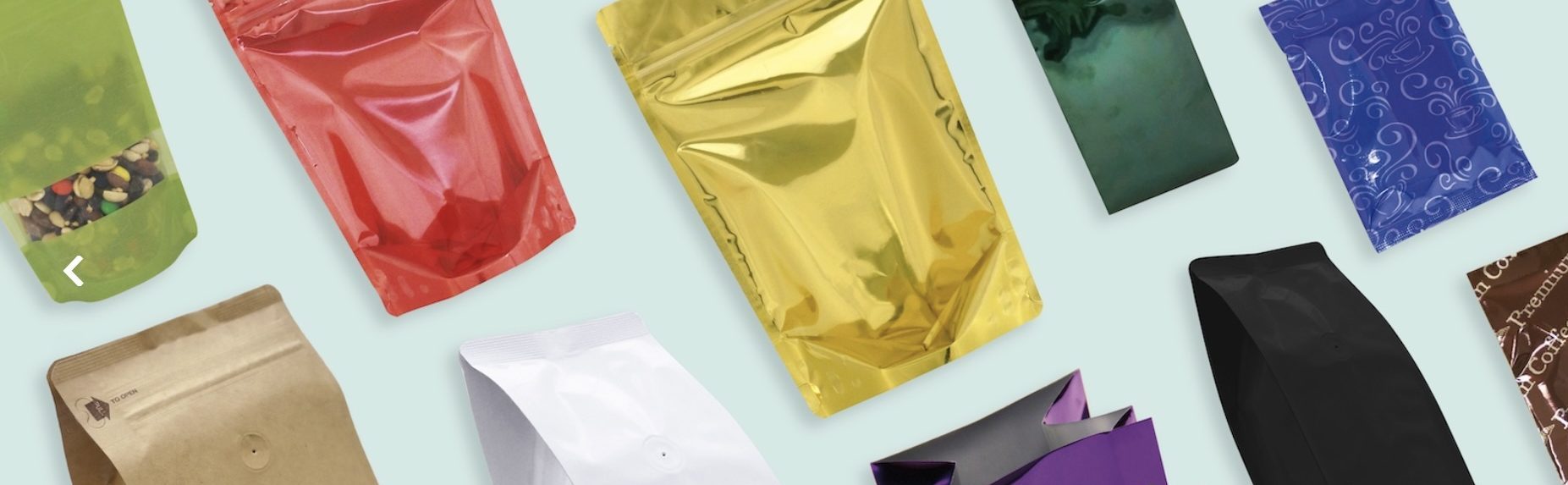
Finish choices also influence perception. Matte surfaces can create a refined, modern look, while gloss can make colors and photography appear more vivid. Clear windows offer product visibility, but a full-color structure may deliver greater protection and a stronger visual block on shelf. There is no universal best finish. The better option is the one that supports the category, the product’s needs, and the brand’s price position.
Stock Pouches or Custom Printing: Use the Right Stage
Stock packaging is often the fastest route for a new product launch, pilot run, seasonal item, or market test. A brand can select an in-stock pouch, apply a label, and move product into sales channels without waiting for a custom printed production cycle. This approach is also useful when testing several flavors, sizes, or audiences before standardizing the assortment.
Custom printed pouches become more compelling when volumes are established and the package itself needs to carry the brand. Direct printing can create a cleaner, more consistent retail presentation than an applied label, particularly across a larger product line. Digital printing can be a practical option for shorter runs and versioned artwork, while flexographic and rotogravure printing can support higher-volume programs where repeatability and unit economics matter.
The transition does not need to be all at once. Many brands continue using stock bags for limited editions, short-term promotions, or new SKU trials while moving core products into custom packaging. That staged approach protects cash flow and gives teams a real-world basis for selecting artwork, size, finish, and volume.
Prepare the Pouch for Filling and Fulfillment
The best package design can still underperform if it does not match the operation. Before purchasing, consider whether pouches will be hand-filled, filled on semi-automatic equipment, or processed on a fully automated line. The pouch opening, zipper location, material stiffness, and top-seal area influence speed and consistency.
Heat sealing deserves particular attention. Seal settings must be appropriate for the pouch material and the product environment. Dust, powder, oil, moisture, or product caught in the seal area can compromise closure quality. Teams should establish a repeatable process for fill level, cleaning the seal zone, seal temperature, dwell time, and quality checks.
Fulfillment creates another set of requirements. Pouches should be tested in the cartons and shipping conditions they will actually face. Consider compression during stacking, temperature variation in transit, potential puncture points, and the appearance of the pouch when it reaches the customer. A package that arrives wrinkled, leaking, or difficult to open can weaken an otherwise strong product experience.
Build a Packaging Path That Supports Growth
Packaging decisions become easier when the supplier can support both immediate needs and the next production stage. Soestern Packaging helps brands source in-stock pouch options for speed, then move toward printed packaging and value-added applications as their programs mature. That continuity can reduce the friction of changing suppliers every time a business adds a SKU, updates artwork, or increases volume.
Request samples, run fill tests, and document what the product actually requires before making a large commitment. The most effective pouch is rarely the one with the most features. It is the one that protects the product, works on the line, earns its place on shelf, and gives the brand room to grow with confidence.