



Packaging Insights
How to Order Printed Pouches for Your Brand


A pouch can look excellent on a screen and still create trouble on a packing line, a retail shelf, or in transit. Knowing how to order printed pouches means making a few production decisions before artwork reaches the press: pouch format, product requirements, barrier needs, order quantity, finishing details, and the print method that fits your launch plan.
For growing product brands, the right process avoids two expensive problems: ordering more packaging than a new SKU can support, or choosing a pouch specification that does not protect the product inside it. Start with the product and the operation, then build the printed package around both.
Start With the Product, Not the Artwork
Your pouch must protect the product, work with your filling process, and present the brand clearly. Those requirements should guide the format and material selection long before finalizing colors or adding a metallic finish.
Begin by defining what goes into the pouch. Dry snacks, coffee, tea, powdered supplements, pet treats, and medical supplies can all require different combinations of moisture, oxygen, light, odor, and puncture protection. A product with oils, sharp edges, strong aromas, or a long shelf-life target may need a more specialized film structure than a low-moisture item intended for quick local sale.
Fill weight is only part of the equation. Measure or estimate the product volume, especially for irregular items such as treats, granola, or botanical ingredients. A pouch that technically holds the stated weight can still look underfilled or become difficult to seal if the product takes up more space than expected. Leave adequate headspace above the fill line for a clean seal and, where applicable, a zipper.
If your product has regulated labeling requirements, build those into the package plan early. Nutrition panels, ingredient statements, supplement facts, lot coding areas, warning language, and barcode placement all need usable space. Your packaging supplier can help confirm production requirements, but product claims and regulatory compliance remain the brand’s responsibility.
Choose a Pouch Format That Fits the Sale
The format changes how customers handle the package, how it displays, and how efficiently your team fills it. It also affects the available print area and the cost of production.
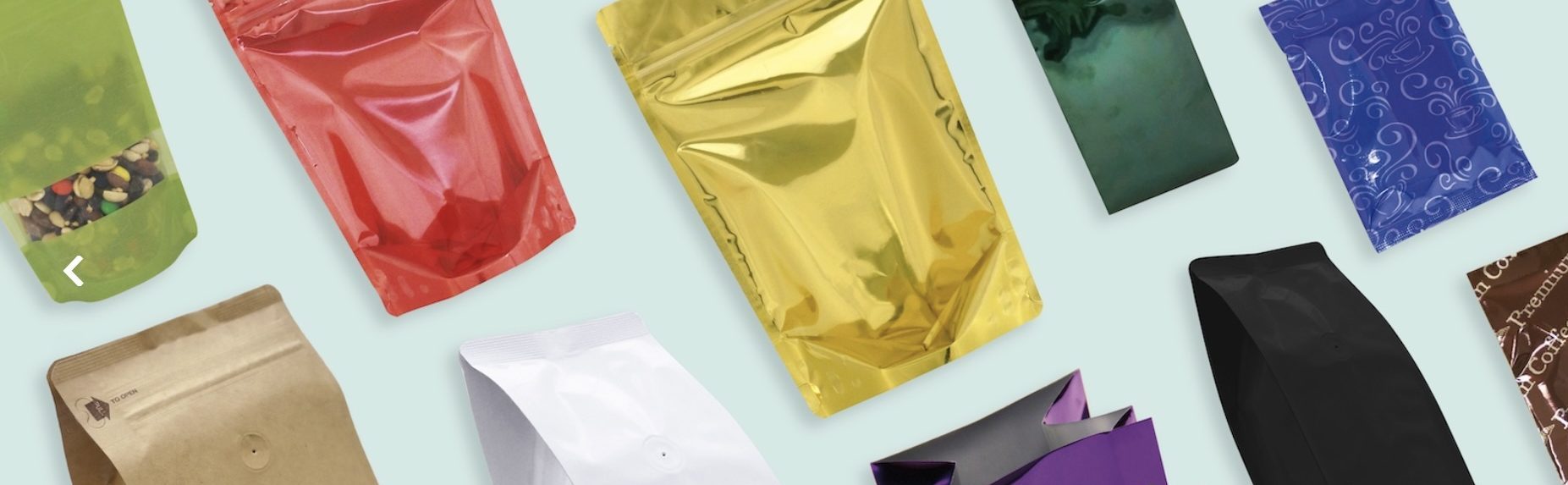
Stand-up pouches are a strong option for retail because they create a visible front panel and can stand on a shelf. They are commonly used for food, coffee, pet products, and supplements. Flat pouches are often practical for samples, single-serve products, smaller quantities, and items sold in boxes or display trays. Gusseted bags and square bottom bags offer more capacity and can suit products that benefit from a traditional bag profile or greater shelf presence.
Paper tin tie bags may be a fit for bakery items, coffee, or dry goods when a paper-forward appearance supports the brand position. However, paper alone may not provide the barrier properties required for every product. The right answer depends on the contents, expected shelf life, distribution environment, and whether the package needs to be resealed.
Consider how the pouch will be sold. A hang hole may matter for pegboard merchandising. A clear window can help buyers see the product but reduces available print area and can affect light protection. A zipper adds consumer convenience, yet it requires sufficient space and a packing process that can accommodate it. A degassing valve is often necessary for freshly roasted coffee, while it is unnecessary for most other dry goods.
Build the Right Material and Barrier Specification
Flexible packaging is more than a printed outer layer. The material structure must perform from production through the customer’s final use.
Ask practical questions: Will the product sit in a warehouse during summer? Will it be shipped nationwide? Does it absorb moisture? Does it release aroma? Is it sensitive to oxygen or light? Does it have sharp pieces that could puncture a thin film? The answers determine whether a standard barrier pouch is sufficient or whether a higher-barrier structure is warranted.
Material selection also involves a trade-off between performance, appearance, sustainability goals, and cost. Compostable packaging can be appropriate for certain applications and brand strategies, but it should be evaluated against the actual product, storage conditions, and disposal pathway. Do not assume any sustainable material will deliver the same barrier performance or shelf life as a conventional multi-layer film.
Ask for samples before committing to a large production run. Fill them with your product, seal them using your actual equipment when possible, and observe how they perform. This small step can reveal issues with fill volume, seal quality, pouch stiffness, product visibility, or shipping durability before they become a full-order problem.
Prepare Artwork for Print Production
Packaging artwork must be designed for the pouch, not simply adapted from a website or label. The press needs production-ready files with the correct dimensions, bleed, safe zones, color setup, and dieline.
Use the pouch supplier’s dieline as the working template. It identifies areas that may be affected by seals, gussets, zippers, hang holes, valves, or other finishing features. Keep critical text, barcodes, and logos away from these areas. A barcode placed too close to a fold or side seal may scan poorly even if it looks acceptable in a digital proof.
Provide high-resolution artwork and use vector files for logos, line art, and text whenever possible. Confirm whether colors are being produced with process printing, spot colors, or a combination of both. A bright brand color can shift when it moves from a backlit monitor to printed film, particularly on metallic, kraft-look, matte, or clear materials.
A proof review is a production checkpoint, not a formality. Review every panel for spelling, net weight, ingredients, claims, legal marks, barcode digits, and contact information. Have more than one person review it. Once printing begins, correcting a copy error can mean scrapping packaging inventory and delaying a launch.
Select the Print Method Based on Volume and Timing
The best print method depends on your order size, number of SKUs, artwork complexity, budget, and timeline. There is no single method that is best for every brand.
Digital printing is often well suited to lower quantities, multiple designs, product tests, and fast-moving launches. It can give brands more flexibility when they are validating flavors, seasonal artwork, or a new retail concept. It is particularly useful when avoiding a large upfront commitment matters more than achieving the lowest per-unit cost.
Flexographic printing is commonly used for larger repeat orders. It can be an efficient choice when artwork is stable, volumes are established, and the brand needs consistent production at scale. Because setup requirements can be greater, it generally makes more sense once demand is predictable.
Rotogravure printing is typically considered for very high-volume packaging programs that require premium image quality and consistent repeat production. It may offer advantages for major runs, but the initial investment and longer-term planning required are not ideal for every emerging brand.
If a full custom print run is not the right first move, branded labels, hot foil stamping, or other finishing applications can bridge the gap. Many businesses launch with in-stock pouches, apply labels while testing the market, then move to printed packaging after they have dependable sales data. This approach can protect cash flow while still putting a retail-ready product in front of customers.
Confirm Quantities, Lead Times, and Your Packing Plan
When you request a quote, provide complete details: pouch style, dimensions, material preferences, fill weight, product category, finish, zipper or valve requirements, number of designs, quantity per design, and delivery timing. Clear information helps prevent a quote that looks competitive but does not include the features your product needs.
Order quantity should reflect more than the first purchase order. Consider expected monthly sales, minimum production quantities, storage capacity, seasonal demand, and the time required to reorder. Ordering too little can create stockouts and rushed freight. Ordering too much ties up cash and creates risk if your formula, branding, or compliance copy changes.
Also review how pouches will be filled and sealed. Hand filling, tabletop sealing, and automated equipment each have different requirements. Confirm the pouch opening, seal area, film compatibility, and case pack before inventory arrives. If you are adding labels, valves, tin ties, or hang holes after purchase, make sure the application process can keep pace with your production schedule.
Approve With Confidence, Then Plan the Next Run
Before giving final approval, verify the finished specification in plain language. Confirm the pouch dimensions, film structure, finish, print design count, closures, special applications, case quantity, delivery address, and expected lead time. Keep the approved artwork and specification on file so repeat orders are faster and more consistent.
Soestern Packaging supports this path from ready-to-ship stock bags through custom printed pouches and value-added applications, giving brands room to test, launch, and scale without changing packaging partners at every stage.
The most productive next step is simple: gather a filled product sample, your target pouch size, artwork status, expected quantity, and launch date. With those details in hand, your packaging conversation becomes a production plan rather than a guess.