




Packaging Insights
How to Choose a Flexible Packaging Supplier


A flexible packaging supplier does more than sell bags and film. The right supplier helps determine whether your product reaches the shelf on time, stays protected through fulfillment, and looks credible when a customer picks it up. For growing brands, packaging decisions also affect cash flow, production schedules, storage space, and the ability to test a new SKU without taking on unnecessary inventory.
The best choice depends on where your business is now and where it is headed. A startup preparing its first retail launch has different needs than an established coffee roaster adding regional distribution. Both need dependable packaging, but the right path may be stock pouches for one and a custom-printed, valve-applied bag program for the other.
Start With the Product, Not the Print Design
Packaging must perform before it promotes. Begin by defining what the package needs to protect against: moisture, oxygen, light, punctures, odor transfer, or product loss. A dry snack, a powdered supplement, pet treats, and roasted coffee can all use flexible packaging, but they do not require the same barrier structure, closure, or format.
Product weight and fill volume matter just as much. A pouch that looks right in a mockup can be too narrow for efficient filling or too tall for the intended shelf. Ask for guidance on dimensions, gusset capacity, material structure, and fill assumptions before placing a large order. This is especially valuable when moving from hand filling to production equipment, where small dimensional changes can affect speed and consistency.
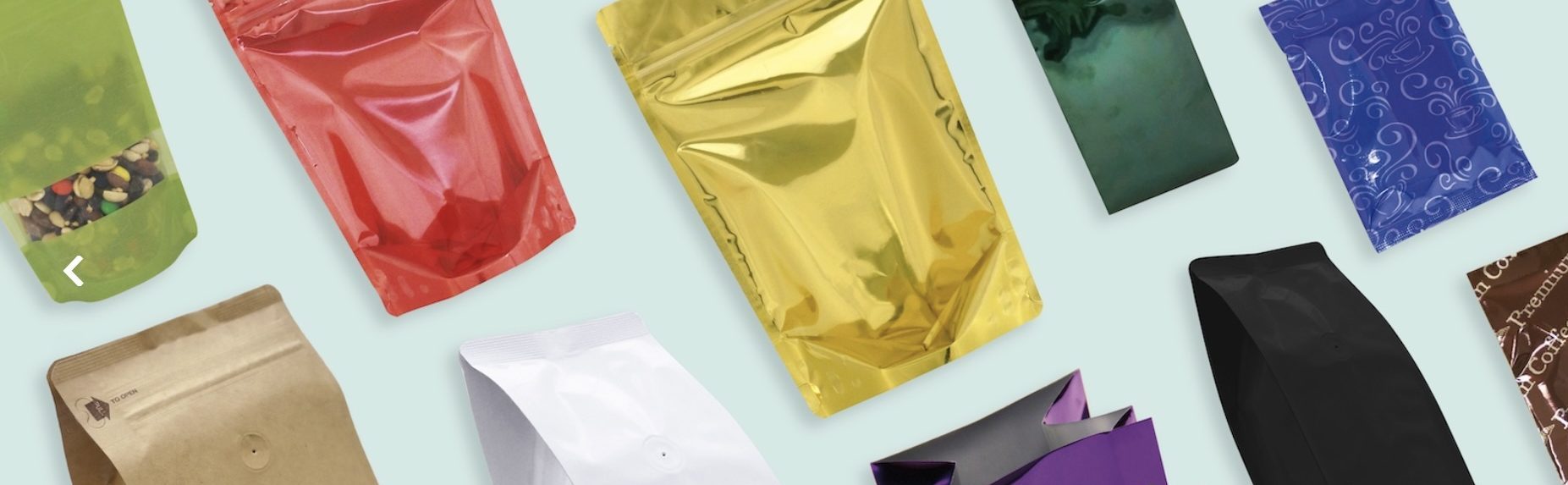
The package also needs to fit the way your customers buy. Stand-up pouches offer strong shelf presentation and work well across many food, pet, and supplement applications. Flat pouches are a practical choice for samples, single-serve portions, and compact products. Gusseted and square bottom bags create more capacity and a traditional retail profile, while paper tin tie bags can suit bakery, coffee, and specialty dry goods applications.
Stock Packaging Gives Brands Room to Move
Stock packaging is often the fastest route from product idea to sale. In-stock bags and roll films allow brands to launch, replenish, and test product formats without waiting for a custom manufacturing run. For a new product, this speed can be more valuable than committing immediately to a printed package that may need revision after market feedback.
Plain stock pouches can still support a professional launch when paired with a well-designed label, hot foil stamp, or other finishing service. This approach gives a business the flexibility to test flavors, sizes, and claims while preserving capital for inventory, sales activity, and customer acquisition.
There is a trade-off. Labels can be an efficient option at lower volumes or during a test phase, but they may not provide the full visual impact or unit economics of printed packaging at scale. A brand with stable artwork, repeatable demand, and established distribution may be ready to move beyond a labeled stock bag. The important point is that stock packaging should not be viewed as a compromise. It is a practical production tool when speed and flexibility matter.
Questions to Ask About Stock Availability
Before relying on a supplier’s stock program, confirm that the available format, color, size, and material are suitable for your actual product. Also ask how inventory is managed, whether replenishment is consistent, and what case quantities make sense for your operation. A bag that is available today but difficult to reorder later can create avoidable disruption.
Shipping matters, too. Packaging is operational inventory, not an optional purchase. Reliable shipping programs and clear order thresholds help procurement teams plan costs and avoid last-minute shortages.
Evaluate Custom Printing by Stage and Volume
Custom packaging turns a functional package into a repeatable brand asset. It gives products stronger shelf recognition, creates a more cohesive e-commerce presentation, and reduces the labor involved in applying labels. But custom printing is not one process with one best use case.
Digital printing is well suited to shorter runs, product tests, seasonal releases, and brands that need flexibility across multiple SKUs. It can help a company introduce printed packaging without the same production commitment associated with longer-run methods. Flexographic printing is often a strong choice when volume increases and the artwork is stable. Rotogravure printing can be appropriate for high-volume programs that require consistent, premium-quality output over long production runs.
A capable flexible packaging supplier should explain these differences in commercial terms, not just technical language. The question is not simply which print method produces the best image. It is which method aligns with your order volume, artwork complexity, launch timing, budget, and forecast confidence.
Be prepared to supply final artwork that is built for the package dimensions and print process. Brand teams should account for seals, gussets, zippers, tear notches, registration areas, barcode placement, and required regulatory copy. A beautiful front panel will not solve a package that leaves insufficient room for lot coding or nutrition information.
Look Beyond the Bag Itself
Many packaging programs become inefficient because essential finishing steps are handled separately. A supplier that can provide packaging materials along with application services simplifies the production path and reduces handoffs.
For example, fresh coffee often needs a degassing valve. A hang hole may be necessary for specialty retail displays. Tin tie application can add convenient reclosure to paper bags, while hot foil stamping can provide a polished brand treatment without requiring a fully printed run. These details are not decorative afterthoughts. They influence usability, shelf placement, production labor, and customer perception.
Sealing equipment and accessories deserve the same attention. The right pouch is only as reliable as the seal applied to it. If your team is hand packing, confirm that the package works with the equipment you have or plan to purchase. If you are outsourcing filling, verify that the co-packer can run the selected format efficiently. This is where a consultative supplier can prevent expensive compatibility problems before the first production day.
Assess Reliability Like an Operations Team
A supplier relationship should stand up to routine purchasing pressure, not just a first quote. Procurement and operations teams should evaluate lead times, communication, inventory visibility, quality controls, and problem resolution. Price matters, but the lowest unit price can become expensive if packaging delays a launch or forces an emergency substitute.
Ask direct questions about domestic manufacturing, order processing, and how the supplier supports repeat programs. American-made packaging can be particularly useful for brands that value closer production coordination, dependable fulfillment, and reduced exposure to long overseas transit times. It may not be the lowest-cost option in every case, but it can offer meaningful control when timelines are tight.
It is also wise to request samples before committing to a large purchase. Check the pouch feel, seal area, zipper performance, print appearance, and fit with your product. For regulated categories such as supplements and medical supplies, confirm that the package has adequate space and functionality for required information and handling needs. The supplier should be clear about what packaging can do and what additional product validation may be required.
Choose a Supplier That Can Support the Next Step
The most useful supplier relationship follows your growth rather than forcing a change every time your needs evolve. You may begin with a stock stand-up pouch and a label, move into digitally printed packaging after initial traction, then transition to a larger flexographic program as volumes become predictable. That progression is easier when one partner understands your product, specifications, and production history.
Soestern Packaging supports this path with ready-to-ship packaging, custom printing options, and value-added application services for brands building retail-ready programs. The goal is not to push every customer into the same order size or format. It is to match the packaging program to the current business requirement while leaving room to scale.
When evaluating a flexible packaging supplier, choose the partner that can help you make the next order with confidence. A package should protect the product, support the brand, and keep your operation moving – whether you are testing a new idea this month or planning the next major production run.