





Packaging Insights
American Made Flexible Packaging for Growing Brands


A missed packaging delivery can delay an entire product launch. It can hold up filling schedules, push back retailer commitments, and leave inventory sitting without a finished sales unit. For brands managing those realities, american made flexible packaging is not simply a sourcing preference. It is a practical way to improve communication, shorten supply lines, and build a packaging program that can respond as demand changes.
For food, coffee, tea, pet product, supplement, and specialty goods brands, the right supplier needs to do more than provide a bag. They need to provide the right format, material structure, print approach, and finishing options at a pace that supports the business. Domestic manufacturing can make that process more manageable, especially when a brand is moving from a small test run to a broader retail or e-commerce rollout.
Why American Made Flexible Packaging Matters
Flexible packaging is closely tied to day-to-day operations. A pouch or roll film has to protect the product, work on available filling and sealing equipment, present the brand clearly, and arrive when production needs it. When one of those pieces fails, the cost reaches beyond the packaging purchase order.
American manufacturing can give buyers clearer access to the people responsible for production, quality, and scheduling. That does not mean every job will have the same lead time or that domestic packaging is automatically the lowest-cost option. Highly specialized structures, materials, or very large-volume runs may still require a different sourcing strategy. But for many US product companies, closer production support reduces uncertainty that can be difficult to manage across long international supply chains.
The advantage is particularly meaningful when packaging requirements change. A new SKU may need a different barrier level. A retailer may require a hang hole. A coffee package may need a degassing valve, or a food product may need a more dependable resealable closure. Working with a domestic packaging partner can make those conversations faster and more specific.
Supply Reliability Is an Operational Advantage
Freight disruptions, port delays, customs issues, and extended transit windows create planning risk. Domestic supply does not remove every variable, but it can reduce the number of handoffs between production and delivery. That matters for businesses that need to replenish stock packaging quickly or coordinate packaging arrival with co-packers, internal production teams, and fulfillment centers.
It also gives procurement teams more room to manage inventory deliberately. Instead of carrying excessive packaging inventory to protect against long transit times, some brands can use in-stock formats for near-term needs while planning custom production around actual sales forecasts. The right balance depends on order volume, seasonality, storage capacity, and the cost of running short.
Quality Conversations Become More Productive
Packaging specifications are rarely one-size-fits-all. A powdered supplement, roasted coffee, gummy product, pet treat, and medical supply can each require a different combination of barrier performance, sealing behavior, closure features, and package construction. Domestic manufacturing support helps buyers discuss those requirements before packaging is committed to production.
It is also worth being precise about what “made in America” means for a specific product. Flexible packaging often uses films, coatings, inks, zippers, valves, and other components with their own supply chains. Brands making country-of-origin or domestic-content marketing claims should confirm the appropriate details with their supplier and legal team. A responsible packaging partner should help define manufacturing scope clearly rather than encourage vague claims.
Choosing the Right Flexible Package Format
The package format should match the product, sales channel, and customer experience. Shelf appearance matters, but a package that looks good and performs poorly in production is not a good packaging decision.
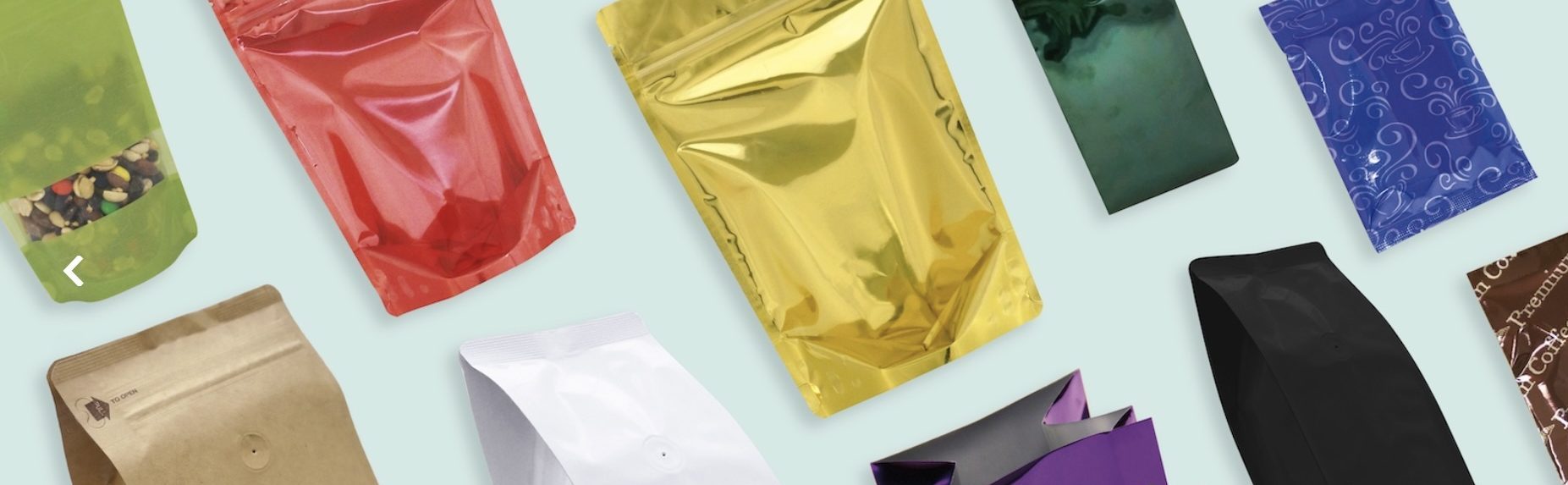
Stand-up pouches remain a strong choice for many retail products because they provide shelf presence, printable space, and a convenient consumer format. They are widely used for snacks, pet products, coffee, supplements, and dry goods. Flat pouches can be a more efficient option for samples, single-serve products, smaller portions, and products where a compact profile matters.
Gusseted bags and square bottom bags offer more capacity and a traditional presentation for products such as coffee, bakery items, granola, and bulk dry goods. Paper tin tie bags can provide a natural, specialty-market appearance while giving customers a simple way to close the package after opening. The best format is not always the most visually complex one. It is the one that protects the product and works reliably from packing line to end user.
Start With Product Protection, Then Build the Look
A package design should begin with the product’s real needs. Consider moisture sensitivity, oxygen exposure, aroma retention, light exposure, grease resistance, product weight, and expected shelf life. From there, determine whether the package needs a zipper, tear notch, valve, hang hole, or other feature.
For example, coffee packaging often requires a valve to release gases after roasting while limiting oxygen entry. A resealable pouch can be useful for products intended for repeated use, but the zipper must still fit the filling process and product weight. For a heavy or sharp-edged product, seal strength and material durability may be more important than a premium surface finish.
These decisions affect material cost, manufacturing requirements, and lead times. A commercially sound package is built around performance first, then refined to support the brand.
From Stock Bags to Custom-Branded Production
Many growing brands make the mistake of treating stock packaging and custom packaging as completely separate choices. In practice, they can be stages of the same packaging strategy.
Stock bags offer a fast way to launch a product, test a new flavor, enter a seasonal market, or manage an unexpected increase in demand. A brand can use labels, applied features, or other finishing services to create a retail-ready presentation without committing immediately to a high-volume printed run. This approach can be especially useful when artwork, product claims, or SKU forecasts are still evolving.
Once sales data becomes more predictable, custom printing can improve shelf recognition and reduce the labor involved in applying labels. Digital printing is often well suited to shorter runs, multiple SKUs, and faster market tests. Flexographic printing can be an efficient choice for established programs with repeat volume. Rotogravure printing may fit high-volume applications where consistent image quality and long production runs justify the setup investment.
The right method depends on run size, number of designs, artwork complexity, color expectations, budget, and reorder pattern. A knowledgeable supplier should explain the trade-offs directly. Custom packaging is an investment in brand presentation, but it should be timed around demand rather than ordered solely because it looks more finished.
Application Services Can Reduce Production Steps
Value-added finishing can help brands avoid adding unnecessary labor to their own operation or co-packing process. Services such as label application, hot foil stamping, valve application, tin tie application, and hang hole application turn a base package into a more functional finished unit.
For a smaller brand, these services may create a practical bridge between plain stock inventory and fully printed packaging. For an established business, they can support special editions, product line extensions, or packaging adjustments without redesigning an entire production program. The question is not whether every package needs every feature. It is whether the feature supports sales, product use, or production efficiency.
A hang hole may be essential for a pegboard retail display but unnecessary for an e-commerce-only item. Hot foil can elevate a premium product, but it should be evaluated against expected order volume and the brand’s price position. Packaging decisions work best when they are tied to a clear commercial purpose.
What to Ask Before You Place an Order
Before selecting american made flexible packaging, buyers should bring a complete picture of the application to the conversation. That includes product type, fill weight, dimensions, planned shelf life, fill method, sealing equipment, target launch date, sales channels, and expected monthly or annual volume.
It also helps to discuss where the product is headed, not only where it is today. A startup may need low-commitment packaging for its first launch, but it should choose a format that can be scaled into custom production later. An enterprise buyer may need continuity across multiple plants, a growing SKU count, or a combination of roll film and premade pouches.
Request samples when possible and test the packaging under real conditions. Check fit, fill behavior, seal integrity, product appearance, and how the package performs after shipping and handling. A package that photographs well is not necessarily ready for production.
Build a Packaging Program That Can Grow
The strongest packaging programs leave room for the next decision. They give a brand access to in-stock inventory when speed matters, custom print options when volume supports them, and application services when a product needs an additional functional or visual detail.
Soestern Packaging supports that progression with stock flexible packaging, custom manufacturing, and finishing capabilities designed for brands that need to launch, refine, and scale without changing partners at every stage.
Start with the package that solves the immediate production need, then use actual sales, customer feedback, and operating data to guide the next upgrade. That approach keeps packaging practical while giving your brand a clear path toward a stronger retail presence.